
POCUS for Physiotherapists: Lung and Thoracic Ultrasound
POCUS for Physiotherapists: Lung and Thoracic Ultrasound
This course includes
Overview
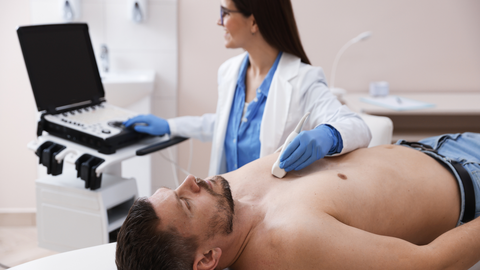
Auscultation and chest X-rays are the backbone of your cardiorespiratory assessment, but each has its limits: auscultation only tells you so much about what's happening beneath the chest wall, and a chest X-ray often means waiting on a radiology report before you can act. Point of care ultrasound (POCUS) puts lung imaging in your hands at the bedside, so you can see what's happening in the moment and adjust your care right away.
In this course from the Cardiorespiratory Division of the Canadian Physiotherapy Association, Dr. Annie Newman walks you through how POCUS works, what common lung findings look like, and how they connect to your clinical decisions. She also shares what the latest research shows about physiotherapist-performed lung POCUS, what still stands in the way of broader use across Canada, and why you should advocate for expanding POCUS use among Canadian physiotherapists.
Learning Objectives
In this online course, we will:
-
Explain the basics of point of care ultrasound (POCUS), including how the device works and its imaging capabilities.
-
Recognize key lung ultrasound findings, including A-lines, B-lines, consolidation, pleural effusion, and absent lung sliding.
-
Identify situations where physiotherapists can use POCUS for cardiorespiratory assessment and management.
-
Discuss the evidence on physiotherapy use of POCUS.
-
Discuss future prospects, training options, and challenges for expanding POCUS use among Canadian physiotherapists.
Audience
This course is for physiotherapists working in or curious about cardiorespiratory care, especially in ICU, acute care, and cardiac surgery settings. It's also a strong fit if you teach, supervise students, or advocate for scope of practice in your province or territory. You don't need prior ultrasound experience: Dr. Newman starts with the physics and builds to clinical interpretation. If you already scan, you'll get a clear picture of where the evidence, protocols, and training landscape stand today.
Why This Course Matters
The evidence suggests lung ultrasound offers better measurement properties than auscultation or chest X-ray for many cardiorespiratory findings, yet most Canadian physiotherapists still can't use it diagnostically. That gap matters for your patients: knowing whether you're looking at consolidation, fluid, or a pneumothorax changes whether secretion clearance, mobilization, or a call to the team is the right next step. At the same time, published protocols vary widely and few studies describe how clinicians were trained. This course helps you understand what POCUS can do, where its limits are, and what the profession needs (standardized protocols, competency-based training, and strong advocacy) to bring it safely into everyday practice.
The instructors

The Cardiorespiratory Division (CRD) unites physiotherapists with a special interest in cardiorespiratory physiotherapy. We provide a valuable forum for our members to share information relevant to working with clients across the lifespan and in all areas of cardiorespiratory.
To facilitate knowledge sharing and encourage networking, we produce our newsletter, the Gas Exchange, three times per year and relay information on job opportunities, online resources, courses and other educational events.
Material included in this course
-
Course Materials
-
Welcome!
-
Full presentation
-
Feedback
I'm a member of the Canadian Physiotherapy Association (CPA). What are the discounts available to CPA Members on Embodia?
As part of our partnership with the CPA, we offer its members discounts on courses and Embodia Memberships. Learn more about the partnership on this page.
In order for the discount to be applied, you first need to authenticate your CPA membership. This is an important step as this is how Embodia 'knows' that you are a CPA member.
To authenticate as a CPA member, please visit this page on the CPA portal.
Please note that your email address on your CPA account must match your email address on Embodia. If needed, you can update your information on Embodia as outlined in this guide.
Is a certificate of completion included with this course?
Once you have completed the course, a certificate of completion (including learning hours and course information) will be generated. You can download this certificate at any time. To learn more about course certificates on Embodia please visit this guide.
This can be used for continuing education credits, depending on your professional college or association. If this course has been approved for CEUs in specific jurisdictions, it will be noted on the course page and CEU information may be added to your course certificate. Please read this guide for more information.
Can physiotherapists use POCUS in Canada?
It depends on your province or territory. According to Dr. Newman, Saskatchewan, Quebec, and Nova Scotia currently allow physiotherapists to use lung and thoracic ultrasound diagnostically, while other provinces, including Ontario, do not yet. Check with your regulatory college for the current rules where you practice.
What is lung ultrasound used for in physiotherapy?
Physiotherapists use lung POCUS to assess findings such as consolidation, atelectasis, pleural effusion, pneumothorax, pulmonary edema, and diaphragm dysfunction. The images help guide treatment choices, support reassessment, and flag when other team members need to be involved.
Do I need ultrasound experience to take this course?
No. Dr. Newman starts with ultrasound physics and probe selection before moving to lung findings and the research, so the course works whether you're new to POCUS or already scanning.
Will this course qualify me to perform diagnostic POCUS?
No. This is a recorded webinar, not a hands-on competency course. Dr. Newman discusses current training options and makes the case for standardized, competency-based training for physiotherapists.